
Clean Cooking Investment Series: Event Highlights
On November 17-18, the Clean Cooking Alliance (少妇自慰), in cooperation with聽聽(a European聽program which aims to mobilize investments in decentralized renewable energy supported by the European Union, Germany, Sweden, the Netherlands, and Austria), hosted the , a virtual convening of leading companies, investors, and other stakeholders from across the clean cooking sector. Over the course of two days, the topics of this invite-only event ranged聽from investment readiness and asset financing to results-based financing and consumer demand in the clean cooking sector. The virtual event brought together speakers, panelists, and attendees from all over the world who are committed to accelerating progress in the clean cooking sector.
Day One
Peter George, 少妇自慰鈥檚 Senior Director for Private Sector & Investment, on behalf of 少妇自慰 and highlighted the importance of private sector solutions in achieving scale. He introduced 少妇自慰鈥檚 Cooking Industry Catalyst as a coordinated effort to build the pipeline of companies offering clean cooking solutions, create robust demand for those solutions, and improve the enabling environment for those companies.
鈥淎ttract[ing] local capital and foreign direct investment into the private sector鈥s important to achieve scale鈥ut also to free up public and philanthropic resources that should instead extend the reach of these commercially viable companies to those consumers at the base of the pyramid who simply lack sufficient purchasing power,鈥� said George.
Michael Franz, Team Leader at GET.invest, welcomed attendees by reflecting on the long history of development efforts around clean cooking. While there are severe consequences to not addressing the challenge of clean cooking, he noted that the evolution of how the problem is being addressed is reason to be optimistic:
鈥淔rom what I can see, much has changed in recent years,鈥� said Franz. 鈥淭here is really a new momentum 鈥� business models, at a political level, new technology鈥nd finally new financing options being made available that are willing to take the leap into clean cooking.鈥�
Kitty van der Heijden, Director-General for International Cooperation at the Netherlands Ministry for Foreign Affairs, also spoke during the event鈥檚 opening remarks, highlighting the tremendous economic and social opportunities that clean cooking presents.聽
鈥淸Clean cooking]聽is an agenda of potential and of opportunity 鈥� creating jobs, business, economic opportunity, delivering clean air, combating deforestation, contributing to health and supporting the mitigation of the greatest danger to all of us: climate change,鈥� said van der Heijden.

Athena Koulouris, Program Manager at the European Commission in the Directorate-General for International Cooperation and Development, shared her insights on the work that the European Union and others are doing to encourage greater investment in the clean cooking sector.
鈥淭here is no one-size-fits-all solution for clean cooking,鈥� said Koulouris. 鈥淭herefore, it is important to support innovative solutions, stimulate the demand side, and also the conducive enabling environment, which has to be adapted to each local context.鈥�
To conclude the opening of the event, Dymphna van der Lans, CEO of 少妇自慰, spoke about the magnitude and importance of the challenge of achieving universal access to clean cooking by 2030. With a little over nine years to go, effective intersectoral collaboration is imperative to achieve this vision.
鈥淭he time to step up political commitment, financing, policies, and partnerships to accelerate access to clean cooking is now,鈥� said van der Lans.
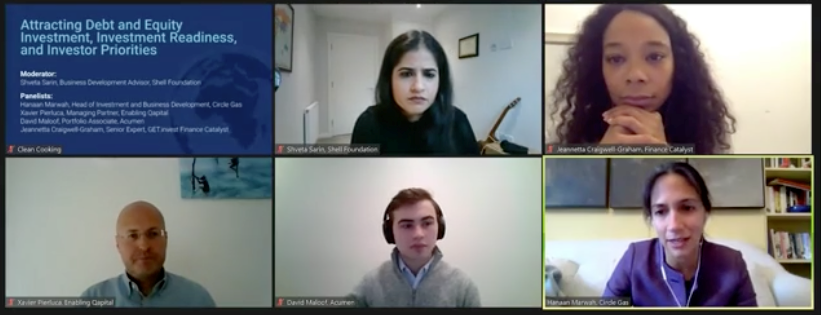
Following opening remarks, the first day of the event included three panel discussions, the first of which focused on . Panelists from Shell Foundation, GET.invest鈥檚 Finance Catalyst, Enabling Qapital, and Acumen highlighted how the conversation around investment readiness in the clean cooking sector has evolved considerably just in the last two years since the Clean Cooking Investment Forum in Kigali, Rwanda in 2018.
The panelists concluded by theorizing that this shift in the sector will lead to clean cooking companies mobilizing ever greater amounts of capital over the coming years through demonstrating a strong track record of sustainable, scalable performance. The panelists also highlighted the importance of disintegration in the clean cooking value chain to achieve greater efficiency and scale through specialization and optimization. To do this successfully, financing is required that aligns with these specializations 鈥� whether that is financing research and development, inventory, or customer receivables.聽
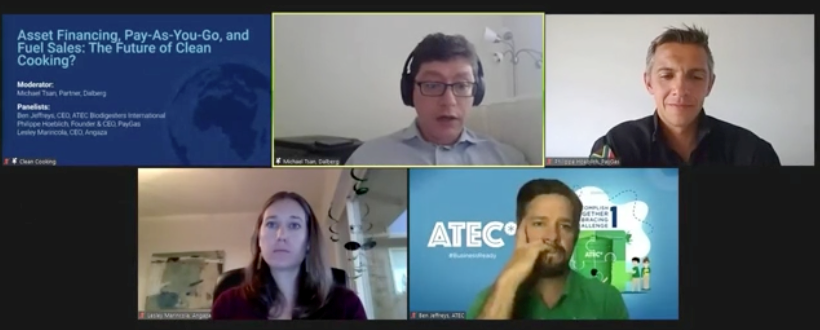
focused on business model innovations that increase affordability of clean cooking solutions through asset financing and innovative approaches to fuel sales. Panelists from Dalberg, ATEC, Angaza, and PayGas discussed some of the challenges and opportunities presented by these models.
PayGas, which focuses on liquified petroleum gas (LPG) technology, approaches the affordability challenge by providing its customers the option to partially refill LPG cylinders based on the amount of cash they have available. This fractional refilling approach avoids some of the challenges of Pay-As-You-Go (PAYG) models that were shared by ATEC, including the requirement for significant amounts of working capital and for companies to develop entirely new skillsets and processes.
Finally, the panel discussed carbon revenue within the clean cooking sector. Specifically, speakers addressed how its potential to increase the affordability of clean cooking technology is limited by poor alignment of carbon methodologies with PAYGO and other digital technologies that would reduce the monitoring costs associated with verifying emissions reductions.
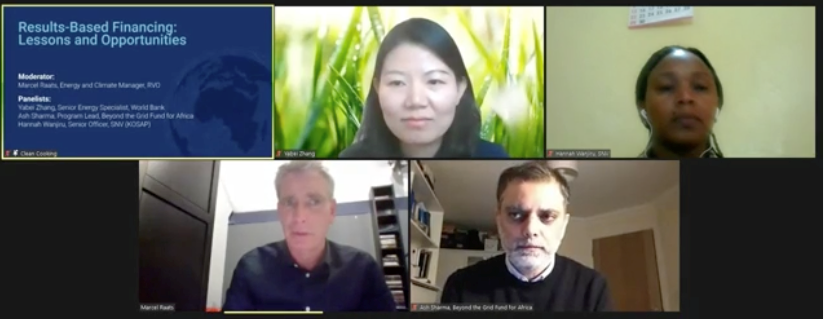
The 聽discussion of day one focused on Results-Based Financing (RBF). Panelists from EnDev, the World Bank, SNV, and the Nordic Environmental Finance Corporation spoke about the importance of ensuring both local and international participation in RBF programs, and the belief that companies with deep, local roots are more likely to continue to serve those markets over the long term. Panelists also discussed the importance of balancing the social objectives of funders providing subsidies via RBF programs with the need for companies to prioritize commercially viable customer segments. If these factors are not considered during the design of RBF programs, then businesses that have become reliant on these subsidies may not be commercially viable once the programs end.
Day Two
聽began with a 聽from 11 ventures that are part of 少妇自慰鈥檚 , which aims to provide a broad range of specialized support to selected companies, solidifying their commercial viability, enhancing their investment-readiness, and facilitating access to growth capital. Topics included a wide range of issues such as business model innovations, technology developments, and exciting new market opportunities.
OTAGO鈥檚 presentation underscored how important commercial users of clean cooking solutions, such as street food vendors, can be for a business. While these customers are typically highly demanding in terms of product performance and value for money, since they are often cooking in full view of their customers on the street, they can also be highly visible and effective promotors of products to household consumers.
Inclusive Energy Ltd. shared insights being generated from the use of its smart meter for biogas systems. For example, continuous monitoring of these systems shows that there can be substantial leakage of methane from biogas systems at nighttime, suggesting the opportunity to explore productive uses of this excess gas.
A presentation by Emerging Cooking Solutions focused on the importance of affordable biomass pellet gasification solutions in achieving the vision of universal access to clean cooking by 2030.

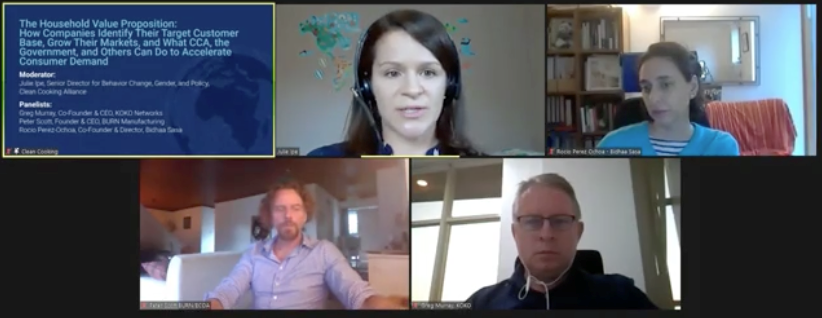
In the , panelists from 少妇自慰, KOKO Networks, BURN Manufacturing, and Bidhaa Sasa shared insights and lessons on how best to identify target customers and grow their markets. There was a strong consensus that products designed with consumer input from the outset, paired with the necessary financing tools, don鈥檛 require much in terms of demand creation.
Panelists also discussed the challenges of introducing unfamiliar products to consumers. Gaining early adopters is often the hardest part of the diffusion of such innovations, since it requires consumers to take a leap of faith. However, one panelist shared that, after penetration reaches around 10-15%, adoption becomes second nature in some communities as word-of-mouth promotion accelerates and users effectively become salespeople for the brand.
Panelists also highlighted the need for more consumer financing products that target rural consumers, with rural women in particular. Echoing comments from the investment panel on day one about the need for disintegration of the value chain, one panelist observed that their company was both a product distribution company and a financing provider 鈥� not out of choice, but out of necessity due to a lack of financing partners and appropriate products that serve their customers.
Finally, there was robust discussion about the role that 少妇自慰 and other international organizations can have in stimulating demand for clean cooking solutions. One example of this is working to support an enabling environment by addressing duties and taxes that reduce the affordability of these products.
In her ,聽Ilham Talab, Technical Advisor at GET.invest, shared that the level of excitement in the sector is markedly different now compared to even a couple of years ago. Talab noted how a greater prevalence of the integration of technology into clean cooking products and business models is a positive sign that the sector is evolving and progressing towards greater scale and sustainability.
鈥淸Information and Communications Technology] is going to be the next big thing in the clean cooking sector and play an even bigger role than in the off-grid sector,鈥� said Talab.聽聽
Wrapping up the event, Colm Fay, Director of Private Sector & Investment at 少妇自慰, highlighted that while the COVID-19 pandemic prevented this event from being in-person, the virtual platform had enabled more inclusive participation than would otherwise have been possible.
The Clean Cooking Investment Series event reflected the point of change at which the clean cooking sector finds itself. Innovations in technology and business models were presented; panelists and attendees discussed high-level partnership opportunities; and speakers passionately debated the urgent need to act to achieve universal access to clean cooking, to address the climate crisis, and to address the health burden created by indoor air pollution, especially in the context of the COVID-19 pandemic.
to watch all of the sessions from the Investment Series.聽